When is a Nevada property owner responsible for ice?
A Nevada property owner is responsible for ice on its own property when it knew or should have known about it and failed to respond reasonably. On a public sidewalk, the owner usually has no duty unless its own use made the ice worse.
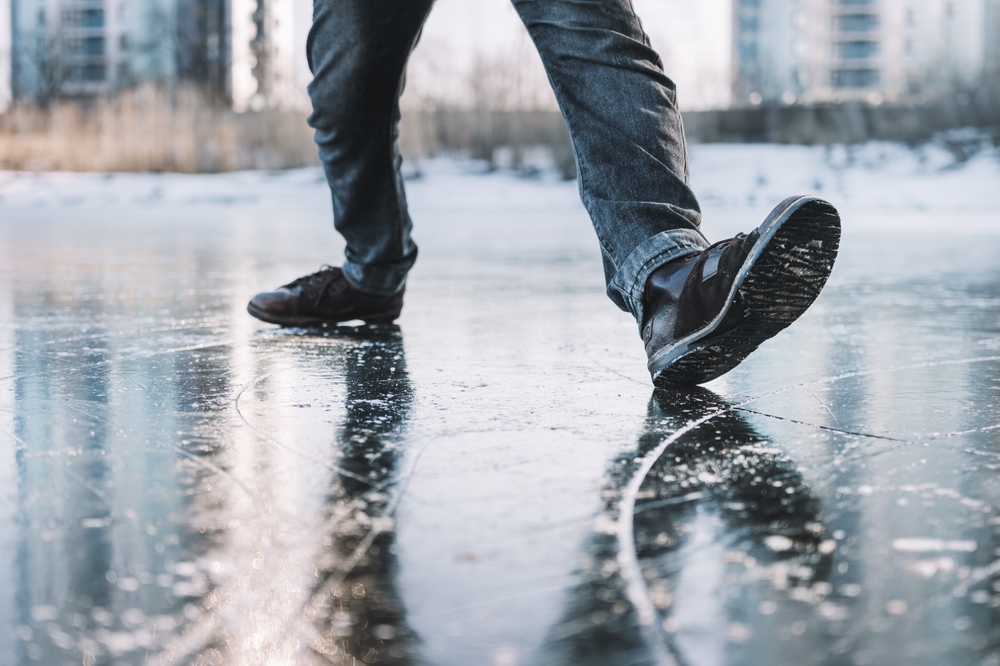
A Nevada property owner can be liable for a fall on ice, but only on property it controlled. The owner must also have known, or should have known, about the ice and failed to act reasonably. Who is responsible for snow removal changes on a city sidewalk, which follows a different rule than a business's own parking lot or entrance.
Reno winters make that distinction practical. A lot that was clear at noon can refreeze by evening, so most claims turn on what the owner did about the ice in the hours before someone fell. If you were hurt in a fall on ice in Northern Nevada, our attorneys can review what happened in a free consultation.
What the Law Says
- Nevada property owners owe people on their land reasonable care for risks on the property, under the Nevada Supreme Court's 2012 decision in Foster v. Costco Wholesale Corp.
- An owner whose property borders a public sidewalk generally has no duty to clear natural snow and ice there unless its own use created or worsened the hazard.
- A hazard being easy to see does not by itself excuse the owner; it affects whether the owner acted reasonably and how fault is shared.
- Under NRS 41.141, an injured person whose share of fault is greater than the defendants' combined share cannot recover damages.
- Nevada's two-year deadline for injury lawsuits under NRS 11.190(4)(e) applies to icy falls, with exceptions such as claims by minors.
Who Is Responsible for Snow Removal on Private Property in Nevada?
The person or business that owns or controls the property is responsible for keeping it reasonably safe, including responding to snow and ice. Nevada no longer sorts visitors into categories like business customers and social guests to decide what they are owed.
In its 1994 decision in Moody v. Manny's Auto Repair, the Nevada Supreme Court said liability should depend mainly on whether the owner or occupier acted reasonably.
The court built on that in Foster v. Costco Wholesale Corp., a 2012 case, holding that a landowner owes everyone who enters reasonable care for risks on the property. The question is whether the owner's response fit what it knew and what it could practically have done.
How Notice Shapes an Icy Fall Claim
An owner is responsible for ice it knew about or should have found through reasonable inspection. Lawyers call these actual and constructive notice. A manager who walked past a glazed entrance at 7 a.m. had actual notice.
Meltwater that freezes from the same downspout across the same walkway every cold night gives the owner constructive notice because the hazard was predictable.
Liability Factors in an Ice Case
Courts and insurers weigh a familiar set of facts when deciding whether an owner acted reasonably:
- How long the ice was present before the fall, measured against how often the owner inspected
- Whether the owner's own design or activity created the ice, such as gutters draining onto a path or plowed piles melting across a lot
- What the owner did in response: shoveling, sanding, applying ice melt, closing an entrance, or posting a warning
- How much foot traffic the owner should have expected at that spot and time of day
- Whether a safer route was available and whether the owner pointed people to it
- What the injured person could see and how carefully they were walking
No single factor decides a case; a patch that formed minutes before a fall reads very differently from ice left untreated all day.
Do Commercial and Residential Property Owners Owe Different Duties?
Nevada applies the same reasonable care standard to businesses and homeowners, but what counts as reasonable differs a great deal between them. A grocery store expecting hundreds of customers before work is in a different position than a homeowner expecting one guest for dinner.
In practice, these situations tend to differ like this:
| Property type | Who usually controls the area | What reasonable care can look like | Records that often matter |
|---|---|---|---|
| Retail store, restaurant, or office | Business owner or tenant, depending on the lease | Inspections before opening, treated entrances, mats, warning signs, cleared accessible parking | Maintenance logs, snow contractor invoices, surveillance video, incident reports |
| Apartment complex | Landlord or management company for common areas | Clearing shared walkways, stairs, and parking areas within a reasonable time after a storm | Work orders, tenant complaints, management emails, contractor service logs |
| Single-family home | Homeowner or the person living there | Clearing the main path to the door when guests are expected, or warning them | Photos, weather records, homeowner's insurance claim file |
| Shopping center with several tenants | Property manager, often under a common area maintenance agreement | A coordinated plan for lots and sidewalks shared by many businesses | Lease and maintenance agreements, contractor scope of work |
Businesses Open to the Public
Businesses usually know when customers will arrive, which makes an untreated entrance at opening time harder to defend than ice from a sudden afternoon squall. A business can also afford measures a homeowner may not, such as a contracted plow service.
Homeowners and Landlords
A homeowner owes guests reasonable care, but clearing the main walkway or pointing a guest to a safer path may be enough at a private home. In apartment complexes, the landlord or management company usually controls shared sidewalks, stairs, and parking lots, and the lease often answers who controlled the exact spot.
What Happens When the Owner Hires a Snow Removal Contractor?
Hiring a contractor changes who does the work, and it can change who is responsible for a fall. The contractor can be liable for its own careless work. The owner can still answer for the property's condition, depending on how much control it kept and what it knew.
Injured people often bring claims against both, and the contract later sorts out which one bears the cost.
When the Contractor May Be Responsible
A contractor that takes on snow and ice work is expected to do it with reasonable care. Problems often show up as skipped areas, piles pushed onto walkways or into drive lanes, or no return visit after meltwater refroze overnight. Each of those reflects how the work was done, so the contractor's own records matter.
Contract Terms That Matter
The written agreement usually shows who was supposed to do what. These terms tend to matter most:
- Scope: Which lots, sidewalks, stairs, and entrances the contract covers
- Trigger: The snowfall depth or weather event that starts service
- Timing: How soon crews must respond and whether they return after refreeze
- Treatment: Whether salting, sanding, or ice melt is included or billed separately
- Records: Whether the contractor must keep time-stamped service logs or photos
- Risk allocation: Indemnity clauses and whether the owner is named as an additional insured
Gaps between these terms and what actually happened on the day of the fall are often where responsibility becomes clear.
How Does Nevada Treat Natural Accumulations of Snow and Ice?
In Wiseman v. Hallahan, a 1997 case, a hotel guest in Reno slipped on ice on the city-owned sidewalk in front of the hotel. The Nevada Supreme Court held that the hotel had no duty to keep that public sidewalk safe. The ice came from natural weather, and the hotel's use of the sidewalk did not cause it.
The court recognized two paths to liability on a public sidewalk. One is special use, such as a driveway whose traffic builds up slush and ice, and the owner must keep that portion reasonably safe. The other is an assumed duty, where an owner's voluntary clearing increased the risk or someone relied on it.
The hotel's staff had usually cleared that sidewalk, but the guest had not relied on that cleaning, so no assumed duty applied. The court also noted that a statute or ordinance can create a duty to clear a sidewalk.
Ice on the Owner's Own Property
Wiseman's no-duty rule addressed a city sidewalk, and the court said the reasonableness standard from Moody applies to injuries on the owner's own premises. A fall in a store's parking lot or an apartment stairwell is judged under that duty of reasonable care. Whether the ice formed naturally becomes one part of the reasonableness question.
Unnatural Accumulations
Ice that the owner helped create gets closer scrutiny. Common examples on Northern Nevada properties include:
- Roof runoff and downspouts that drain across walkways
- Plowed snow piled at the high side of a sloped lot, melting downhill by day
- Sprinkler systems left running into freezing nights
- Uncovered stairs where meltwater from a canopy drips and refreezes
When an owner's design or habits turn ordinary snowmelt into a sheet of ice, the natural-weather explanation loses force.
Why Reno's Winter Conditions Make Timing Matter
Reno sits at about 4,500 feet in a high desert, where winter days often climb above freezing and nights drop well below it. Snow melts in afternoon sun and refreezes after dark, sometimes in a thin, clear layer. Shaded north-facing entrances can stay icy for days while the rest of a lot dries out.
Weather Records and Notice
Because notice turns on how long ice was present, the hours before a fall carry real weight. Records from the National Weather Service office in Reno can show when temperatures crossed freezing and when precipitation fell. Because the scene changes within hours, what to do after a fall on ice is worth knowing before winter arrives.
How Fault Is Shared in Reno Slip and Fall Claims
Nevada uses modified comparative negligence. You can recover as long as your share of fault is not greater than the combined fault of the parties you sued, and any award is reduced by your percentage. That rule comes from NRS 41.141.
Insurers in Reno slip and fall claims often argue that the person should have seen the ice, worn different shoes, or taken another path.
Shared Fault in Dollars
Suppose a jury finds total damages of $100,000 after a fall in an apartment parking lot. If the jury assigns 20 percent of the fault to the injured tenant for walking across a visibly icy section, the tenant's award falls to $80,000. If the jury instead assigns 55 percent to the tenant, Nevada law bars recovery entirely.
Open and Obvious Ice
Ice that was easy to see does not automatically defeat a claim in Nevada. Foster held that an open and obvious condition bears on whether the owner acted reasonably, while the injured person's own care is weighed when fault is divided.
The Deadline to Sue After an Icy Fall
An icy-fall lawsuit has to be filed within two years under NRS 11.190(4)(e). NRS 11.250 pauses that clock for anyone who was under 18 or legally insane when the fall happened.
Our firm has handled icy premises claims, including a $1,400,000 recovery for a client who slipped on ice while making a delivery to a commercial property. That recovery is one of the firm's published past results, which do not predict future outcomes.

Snow Removal Responsibility in Nevada: Common Questions
Does homeowner's insurance cover a guest who slips on ice?
Many homeowner's policies include personal liability coverage that can respond when a guest is hurt on the property, subject to the policy's limits and exclusions. The insurer usually investigates and negotiates the claim, so the guest is rarely dealing with the homeowner directly about money.
What if I slipped on black ice I could not see?
Black ice can help an injured person's side of a Nevada claim because a hazard that is hard to see weighs against arguments that the person should have avoided it. The owner's side may argue that the ice was equally hard for the owner to detect, so inspection habits and weather records become central.
Does a warning sign protect a property owner from liability?
A warning sign is one factor in whether a Nevada owner acted reasonably, and it does not automatically end the owner's responsibility. If the ice could have been treated or the area closed with little effort, a sign alone may fall short of reasonable care.
Does a property owner have to clear snow while it is still falling?
Nevada has no fixed rule requiring owners to clear snow during a storm; the question is whether the owner's response was reasonable for the conditions. An owner who waited until a storm ended and then treated walkways promptly is in a different position than one who never treated them at all.
What if I fell on ice at a city or state property in Reno?
Claims against Nevada government entities follow special rules. Under NRS 41.036, the claim goes to the Attorney General for a state agency, or to the city or county's governing body, within two years. NRS 41.035 also caps damages in these cases at $200,000 per claimant.
Getting Answers Before the Next Storm
The facts that decide an ice case start to fade within days: when the lot was last treated, who held the snow contract, and what the weather did overnight. Viloria, Oliphant, Oster & Aman prepares every personal injury case as though it will be tried, starting with the records from the day of the fall.
The firm is selective about the cases we take, so you work directly with the attorney handling your claim instead of being passed between staff. Our attorneys also bring decades of experience in Reno and Washoe County courtrooms.
If you fell on icy property in Reno, Sparks, or elsewhere in Northern Nevada, you can talk with a Reno premises liability lawyer at no cost. Call 775-284-8888 or send us a message to set up a free consultation.